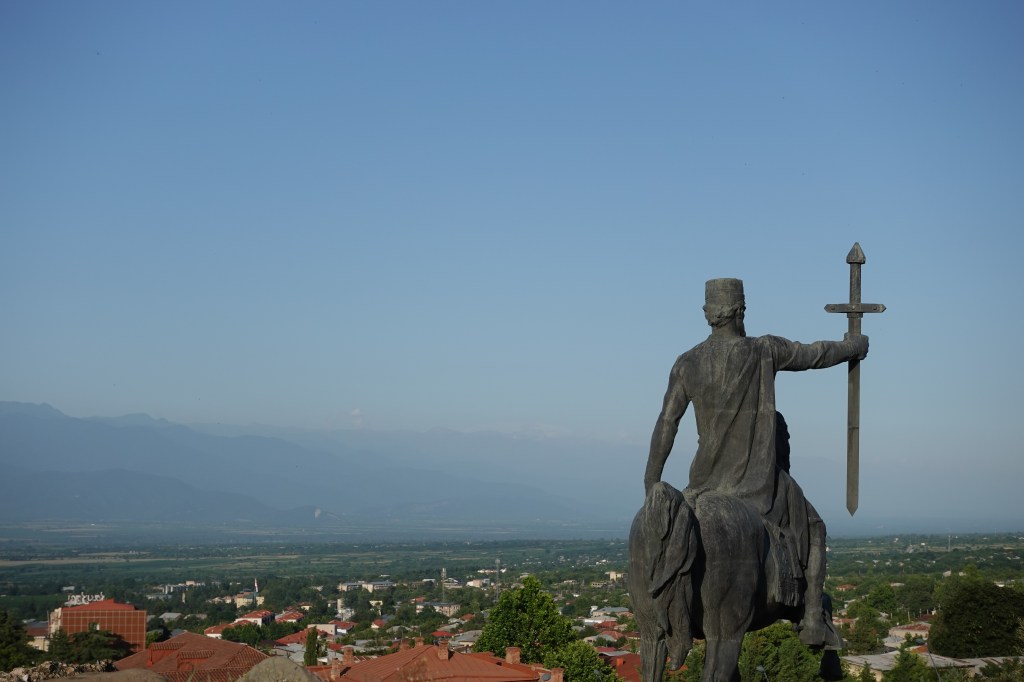
My journey to Tusheti began in Telavi, in the Kakheti region, east of Tbilisi, where much of Georgia’s wine is produced. The town is perched on a hill above the Alzani valley, giving beautiful views out over the vineyards with the mountains of Tusheti in the distance. Telavi was once a royal city, at a time when Georgia was divided into separate kingdoms, and the royal fortress of King Erekle II still stands in the centre of town, along with his imposing equestrian statue.

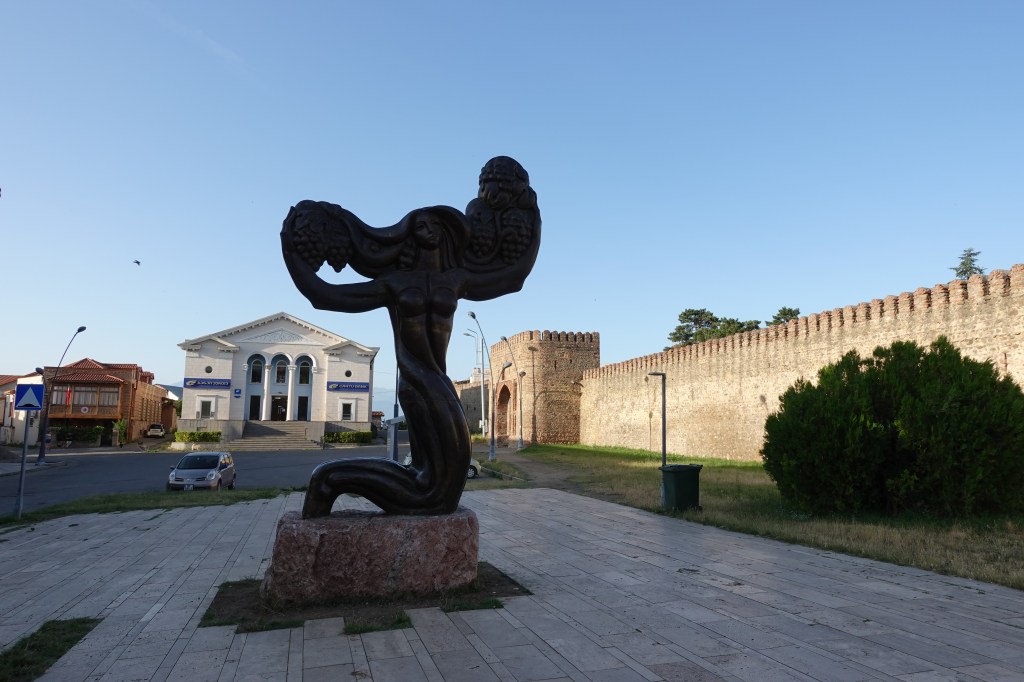
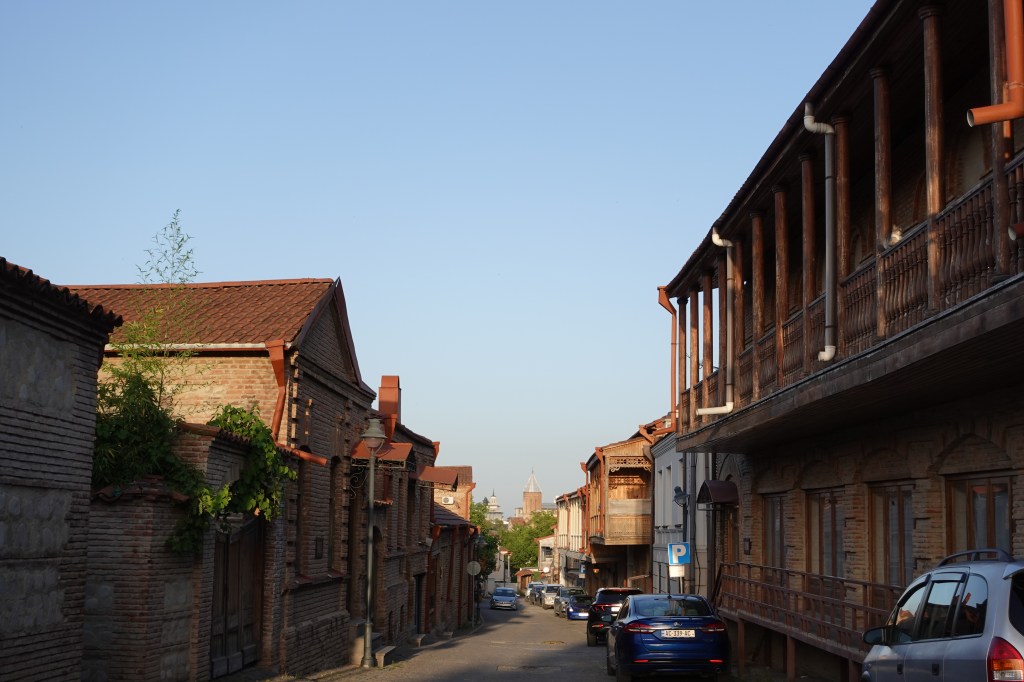

The old town with its cobbled streets and wooden balconies has been nicely preserved, too. Sitting down at a café table, I decided tonight was the night for some khinkali. These Georgian dumplings are especially delicious: inside the dough you find not only filling, but also a little soup. There is a whole technique to eating them: first, wait for them to cool down slightly (a big test of patience when you can see them in front of you). Then, picking the khinkali up by the part where the dough is bunched together, called the kudi (tail), bite a little hole and suck out the soup. And finally, eat the filling with the rest of the dough (apart from the kudi, which you leave on your plate as a record of the number of khinkali you’ve eaten…).
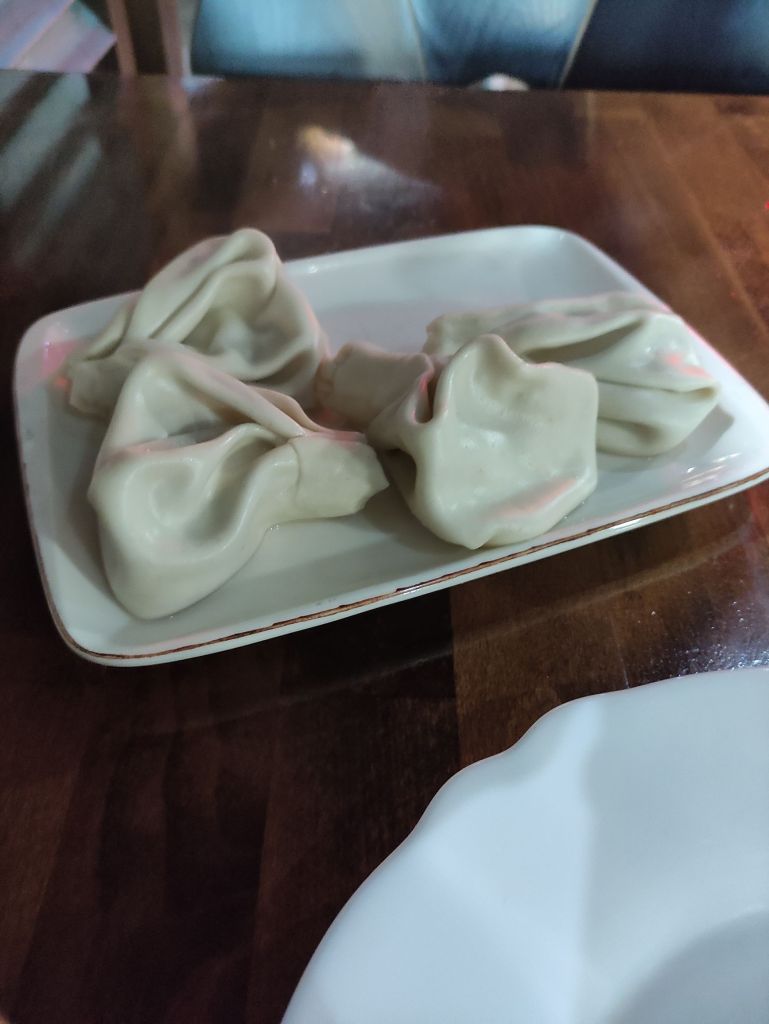
These ones turned out to be very tasty indeed, but little did I know they were not to be the last khinkali of the evening. When I got back to my guesthouse, the family running it had guests round, and no sooner had I stepped through the door, than I was summoned to come and join the party. I was poured a glass of Kakhetian wine, another plate of khinkali was placed in front of me, and so feast number two began. The children in the family provided the musical entertainment, and the other guests that night (a Russian-Italian couple) and I were soon being given an education in Georgian jokes about Armenians (of which there are very many, it turns out).
The next day, having more or less digested the previous night’s food and wine, I made the journey over the 2,826m Abano pass into Tusheti by 4×4. This road may have featured on a BBC programme called “World’s Most Dangerous Roads”, but thankfully with my driver Korcha at the wheel, it certainly didn’t feel that way. In fact, the difficult access to Tusheti seems to have greatly helped to preserve its local traditions and natural landscape: the road along which I travelled into the region was only built in the 1960s-70s by the Soviets. These days, most Tush people spend the colder months in Alvani (down in the lowlands, where I started my 4×4 jouney), returning to Tusheti to graze their sheep only for as long as the road is clear of snow, roughly from June to early October.
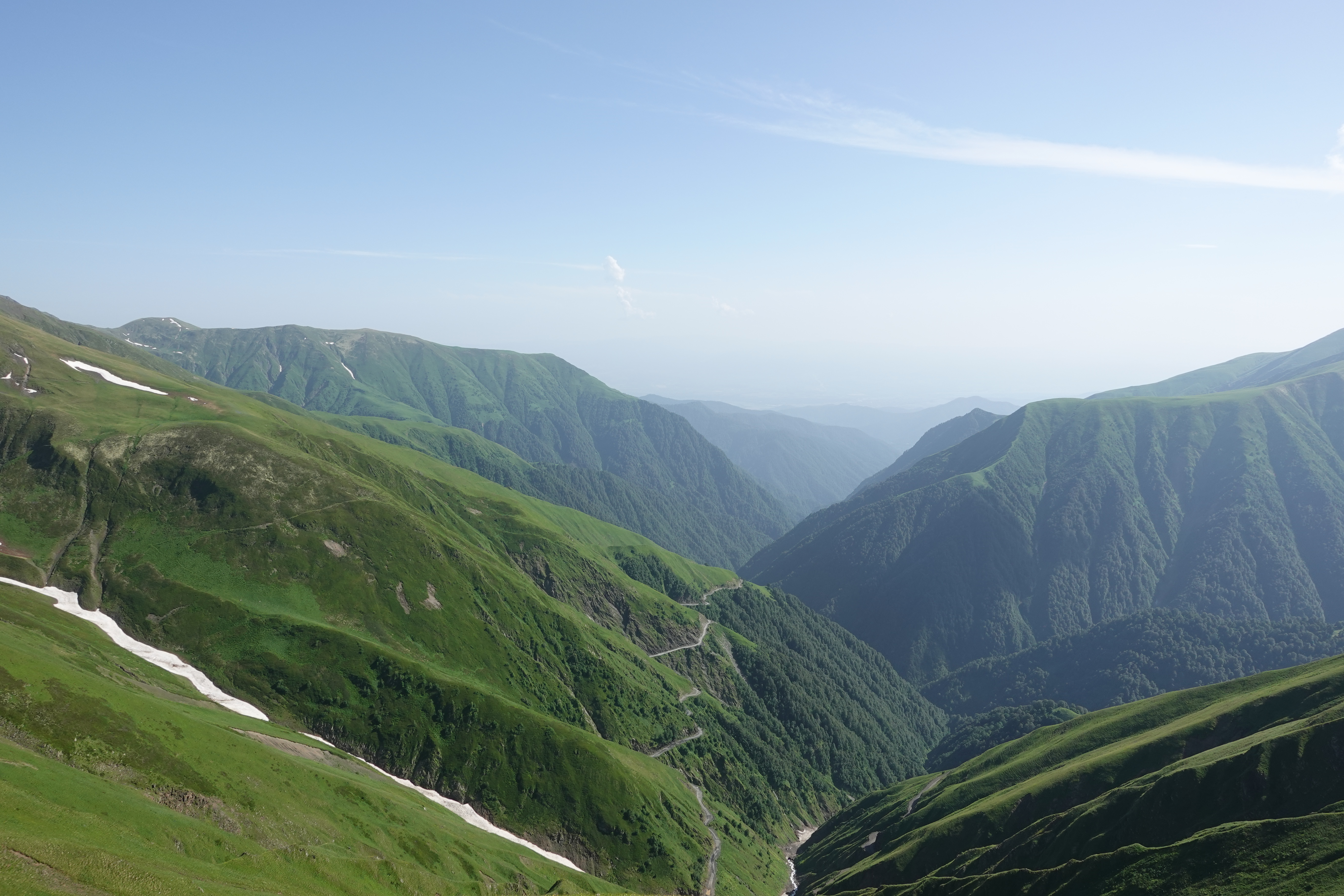
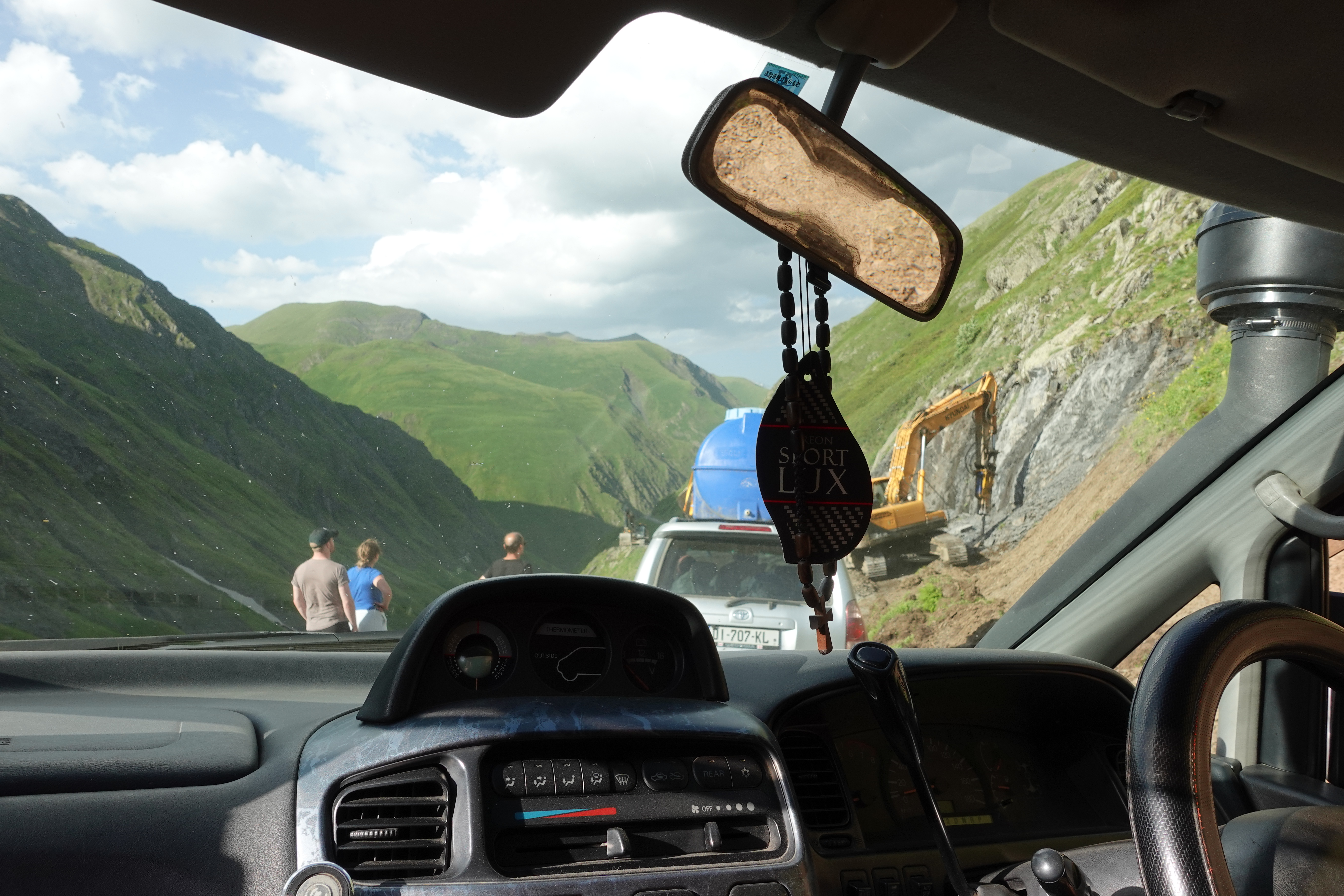
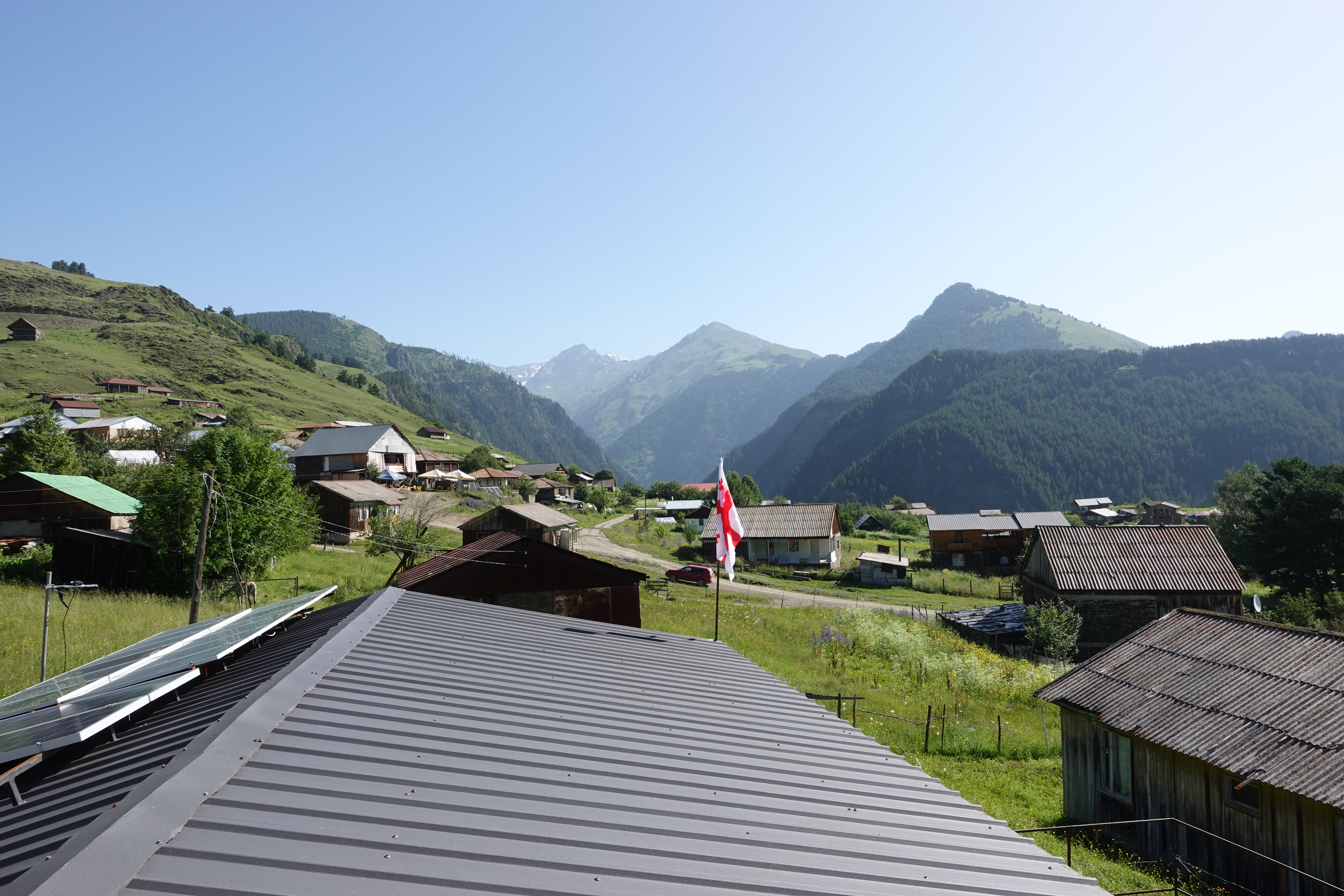
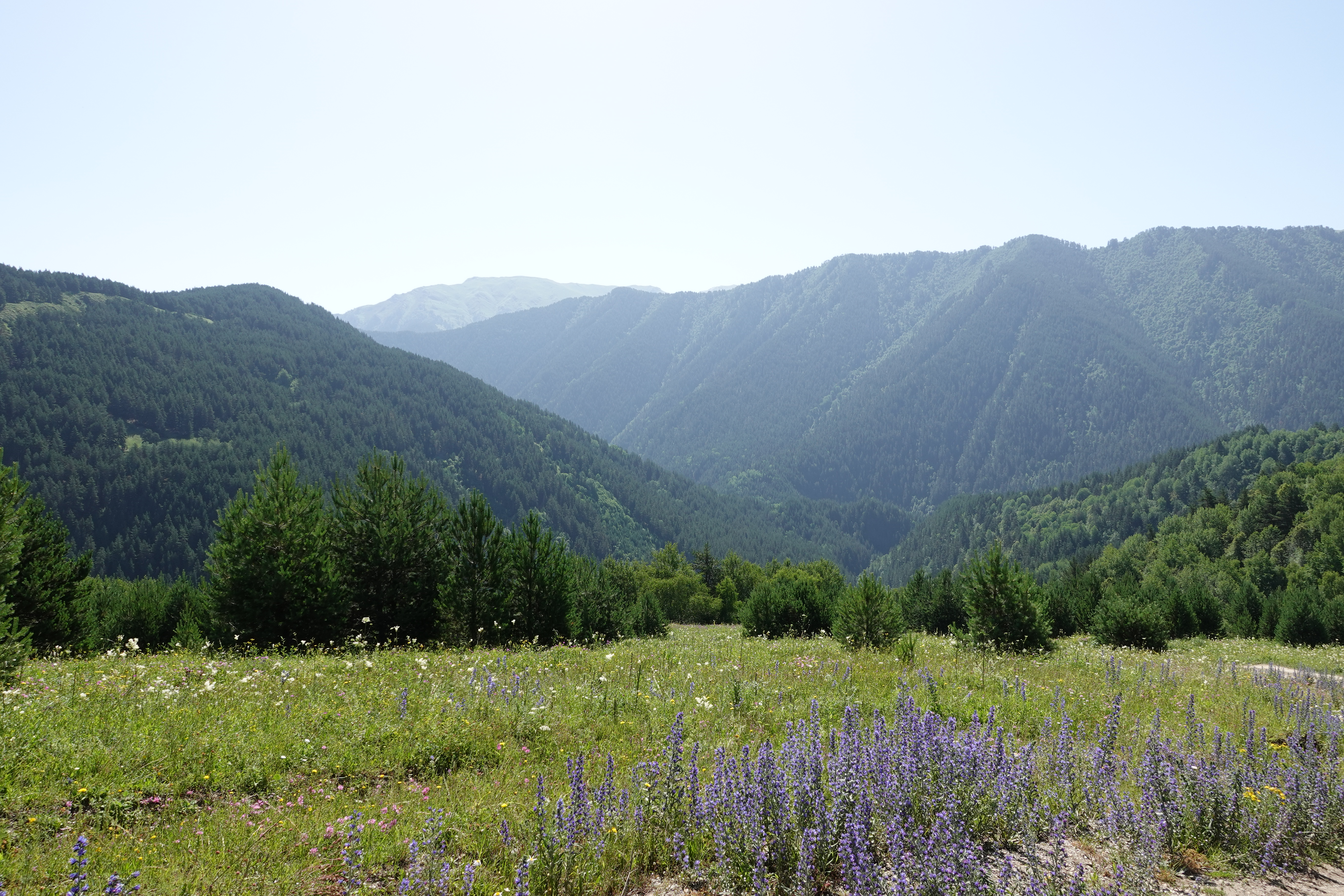
My first day of hiking took in many of the villages which served as filming locations for the Soviet classic film ‘Mimino’. This comedy follows the life of a Georgian helicopter pilot whose job it is to ferry goods and people between the lowlands and various mountain villages in Tusheti. He dreams of becoming a far more flashy Aeroflot pilot, but in the end decides to remain in Tusheti, but not before he has had a fair few adventures with an Armenian truck driver (cue the traditional Georgian jokes about Armenians…).
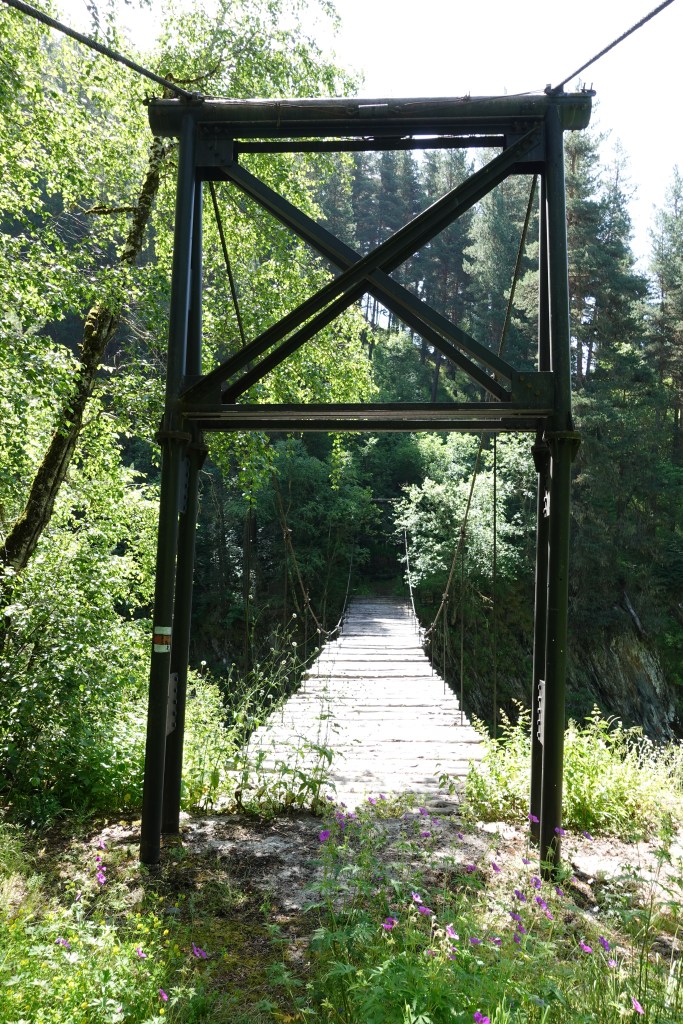
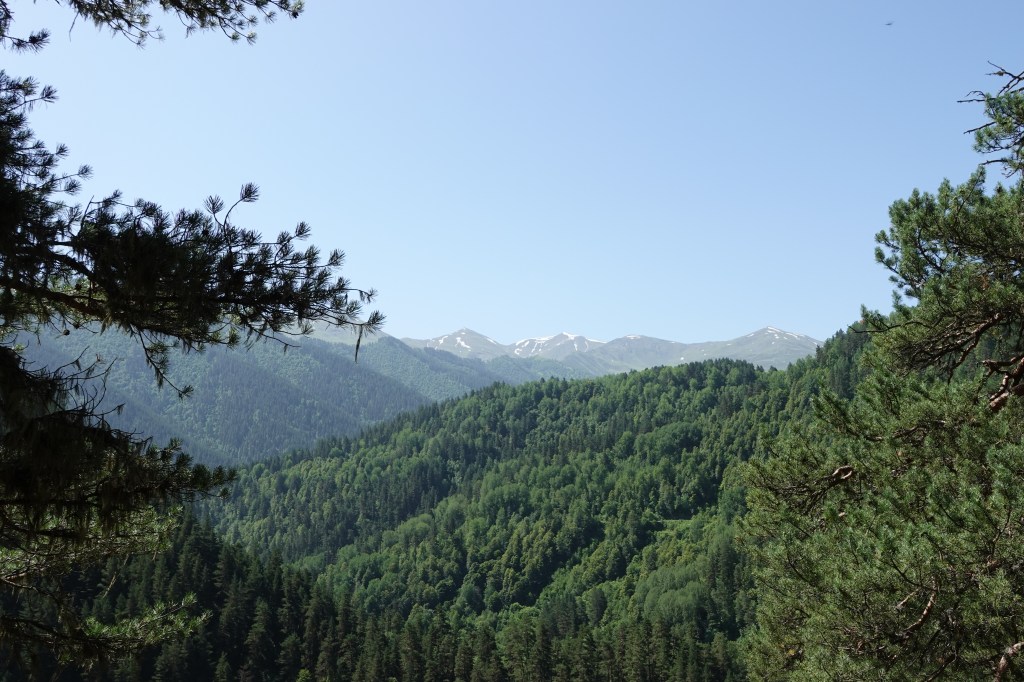
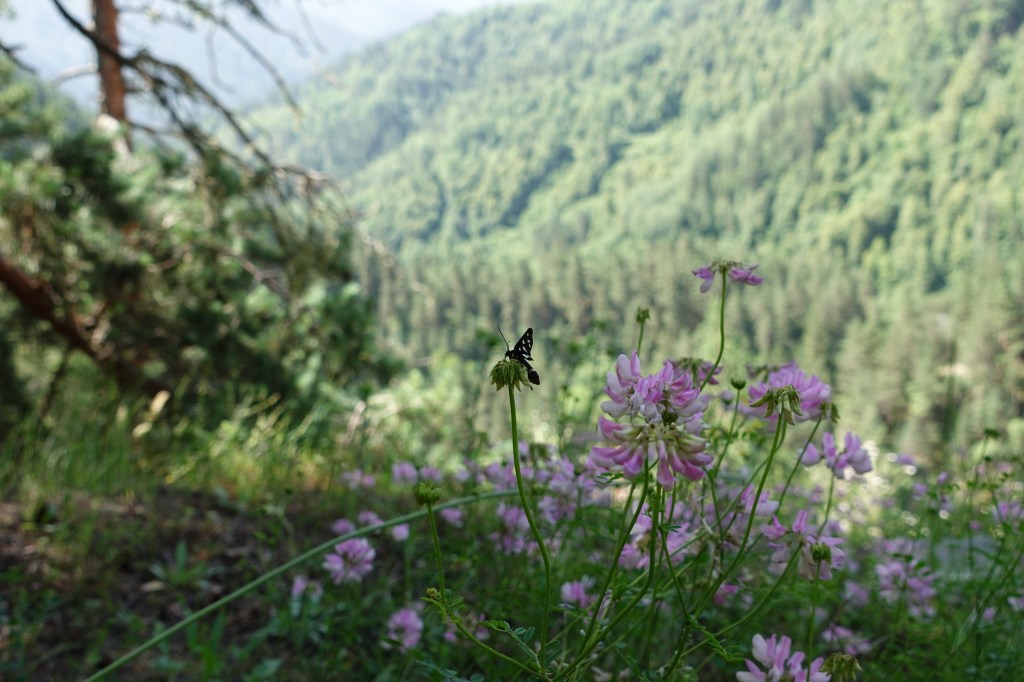
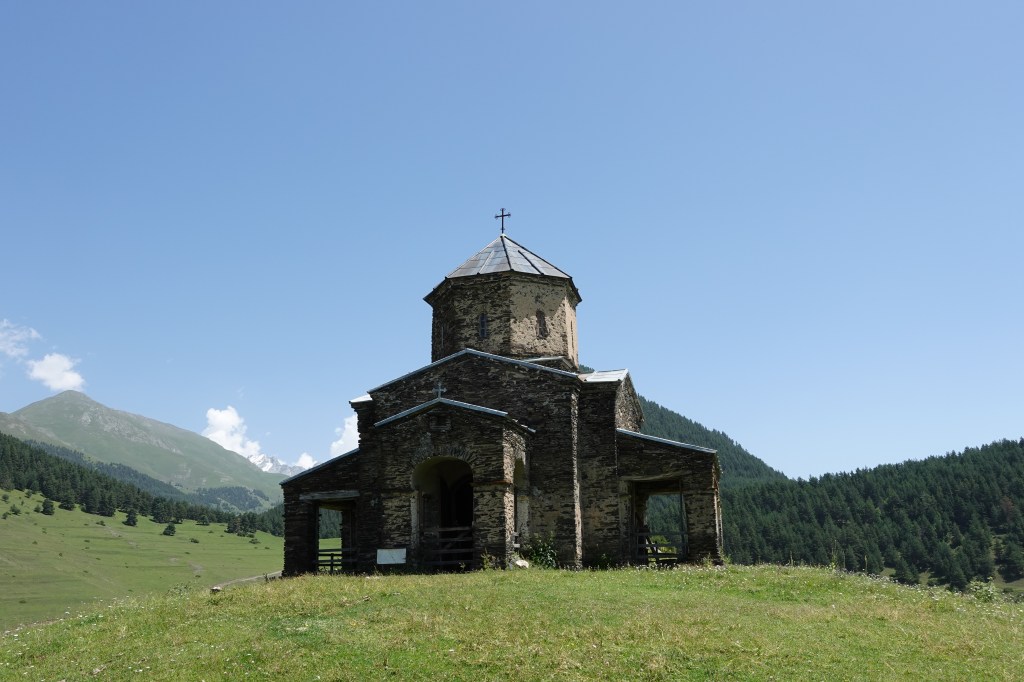
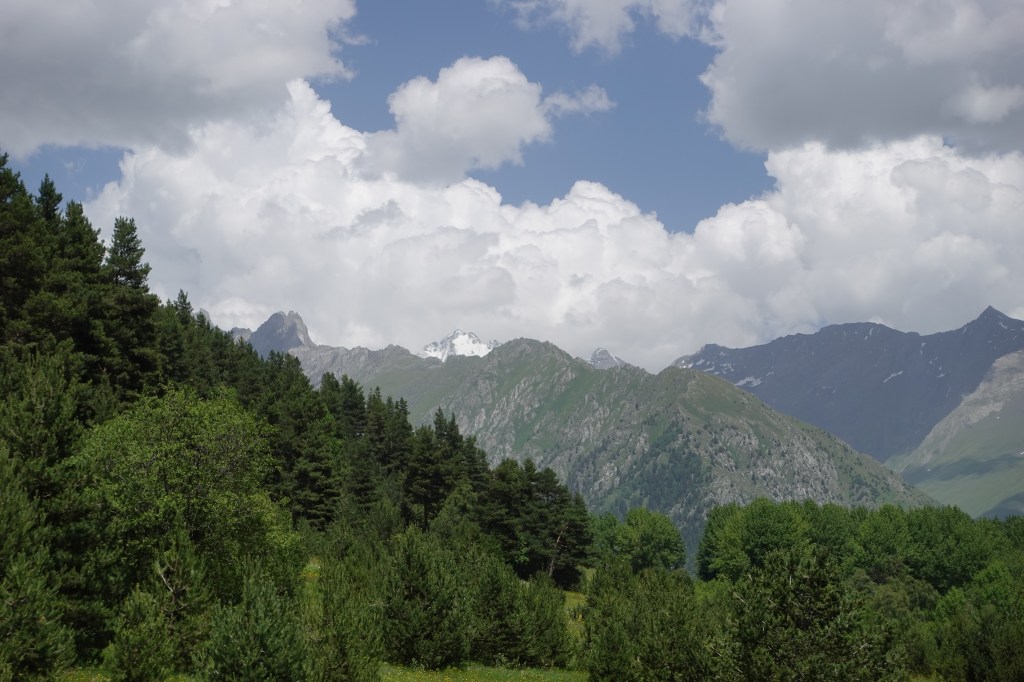
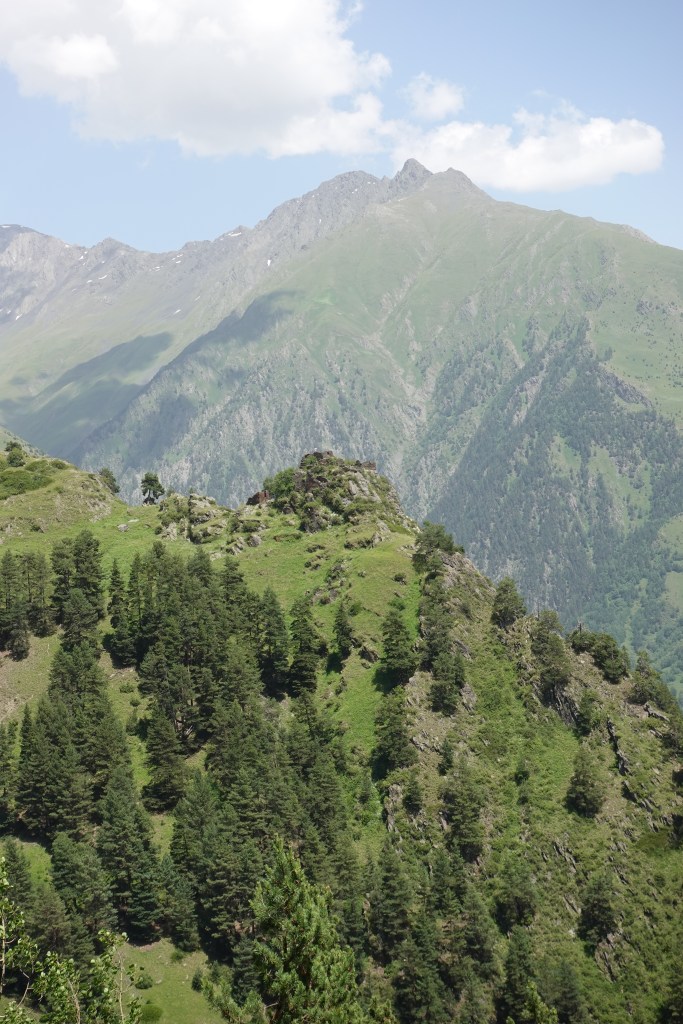
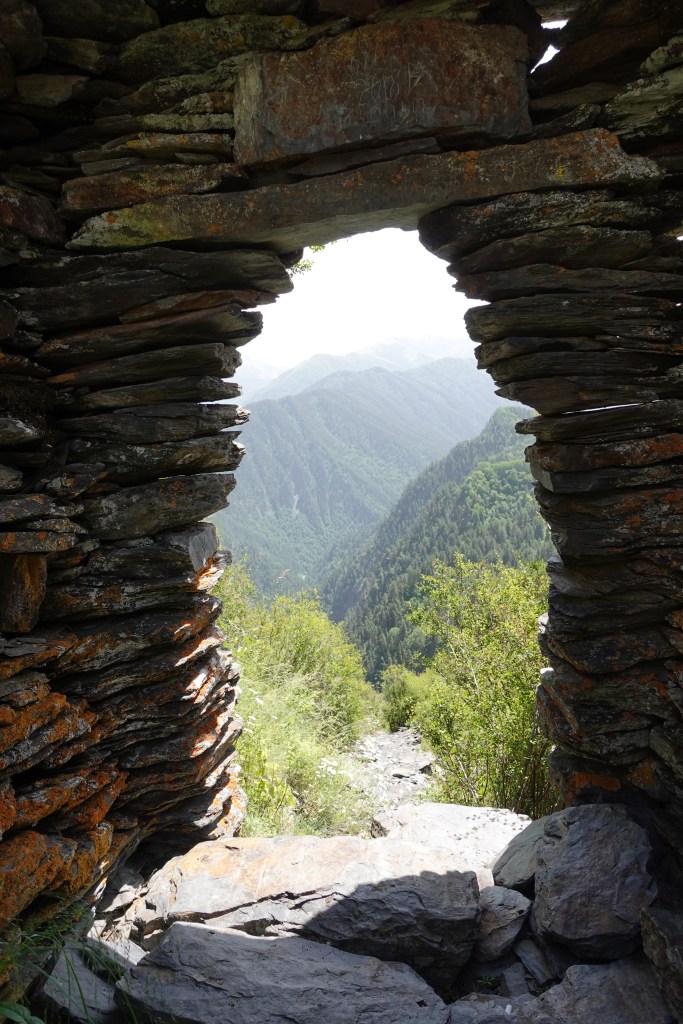
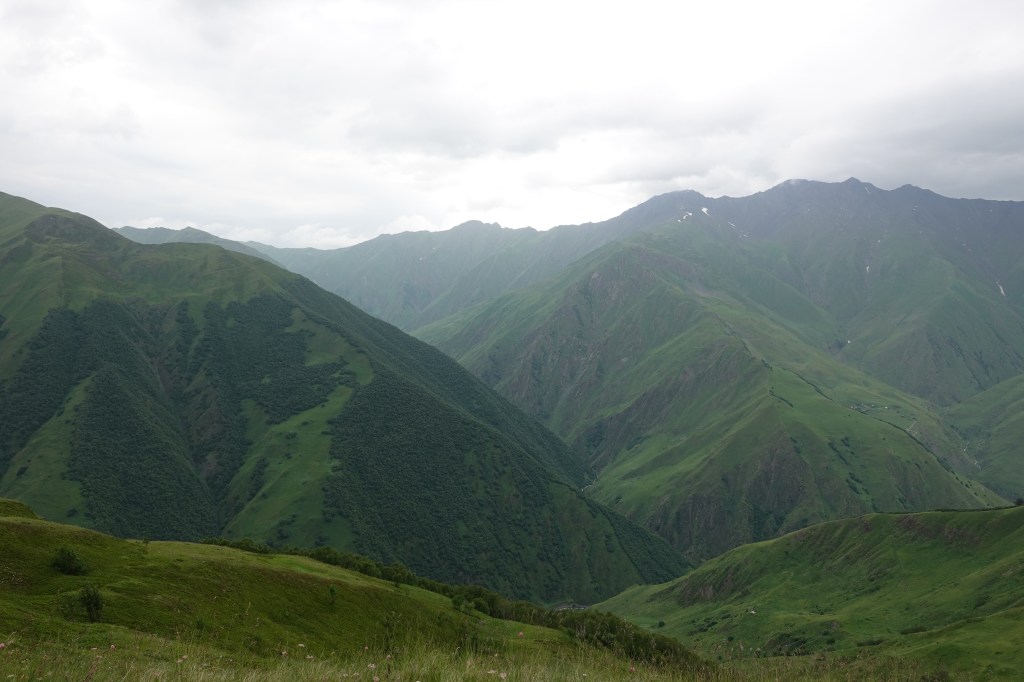
The next day, I set off on a four-day trek which was to take me from Omalo up a river valley towards the Atsunta pass (the highest in Georgia at 3,400m above sea level) and then down into the next region, Khevshureti, and to the historic village of Shatili. Here’s a photo diary of that hike:

The last view back over Omalo 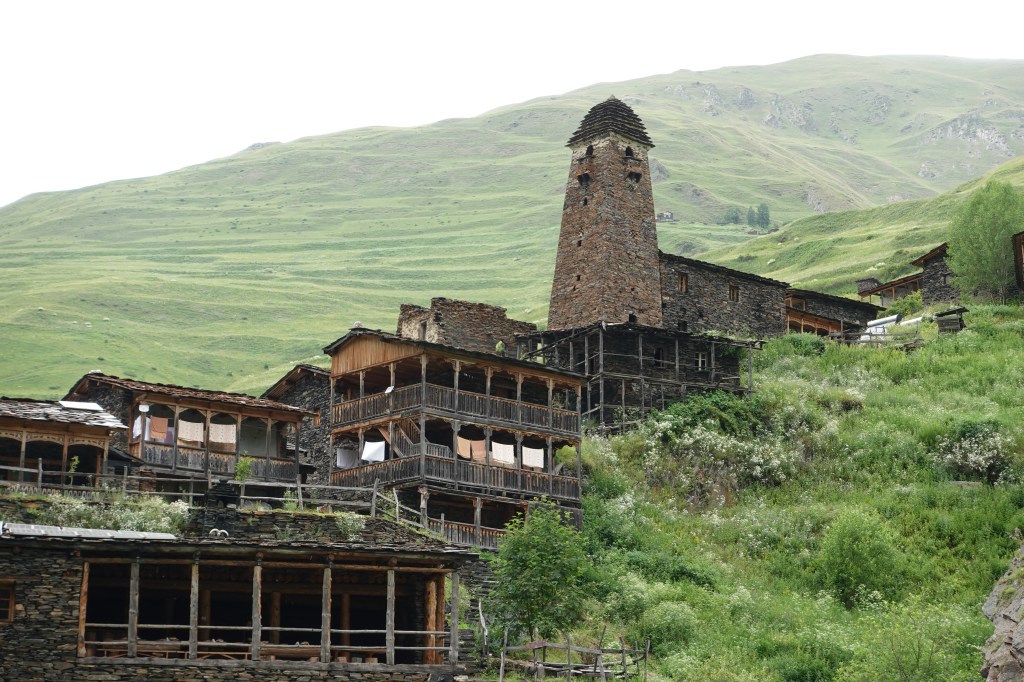
Dartlo 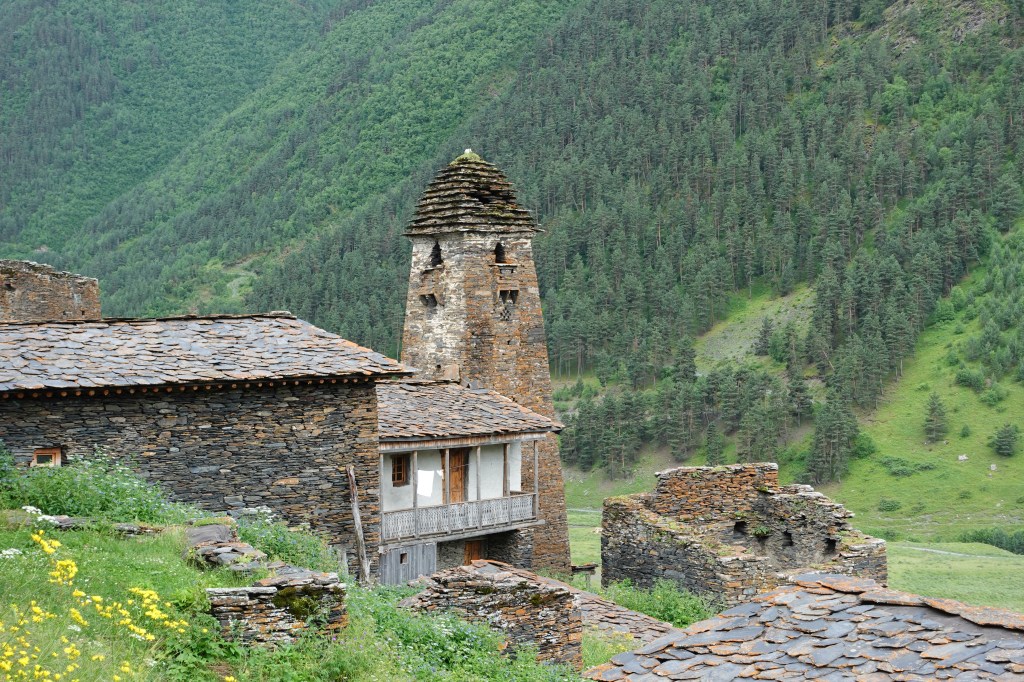
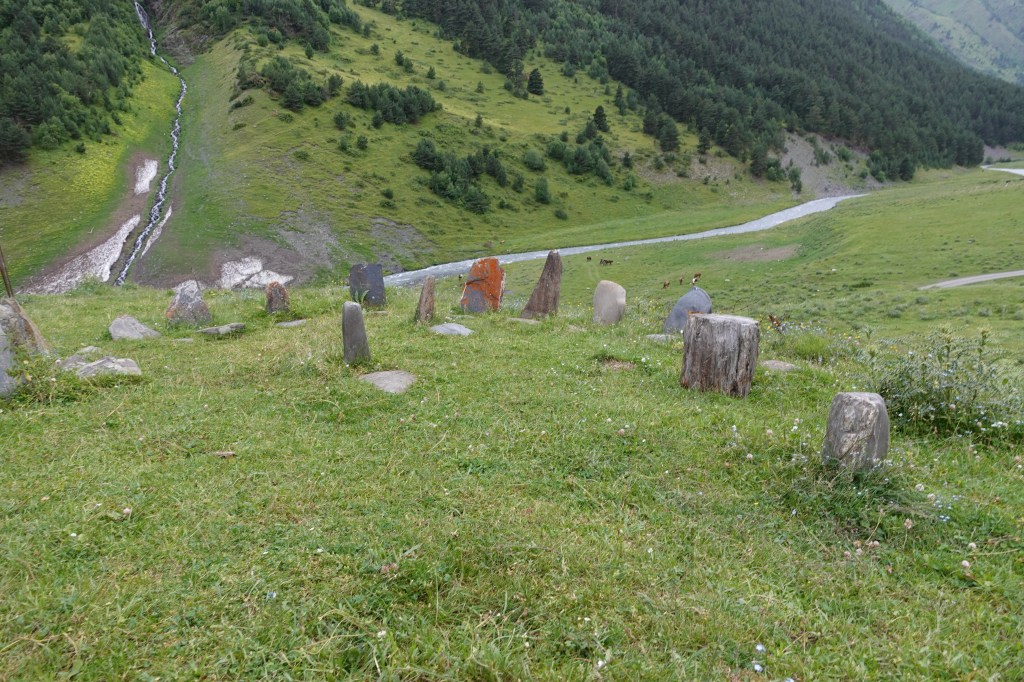
The stone seats of Dartlo’s 17th-century open-air courtroom 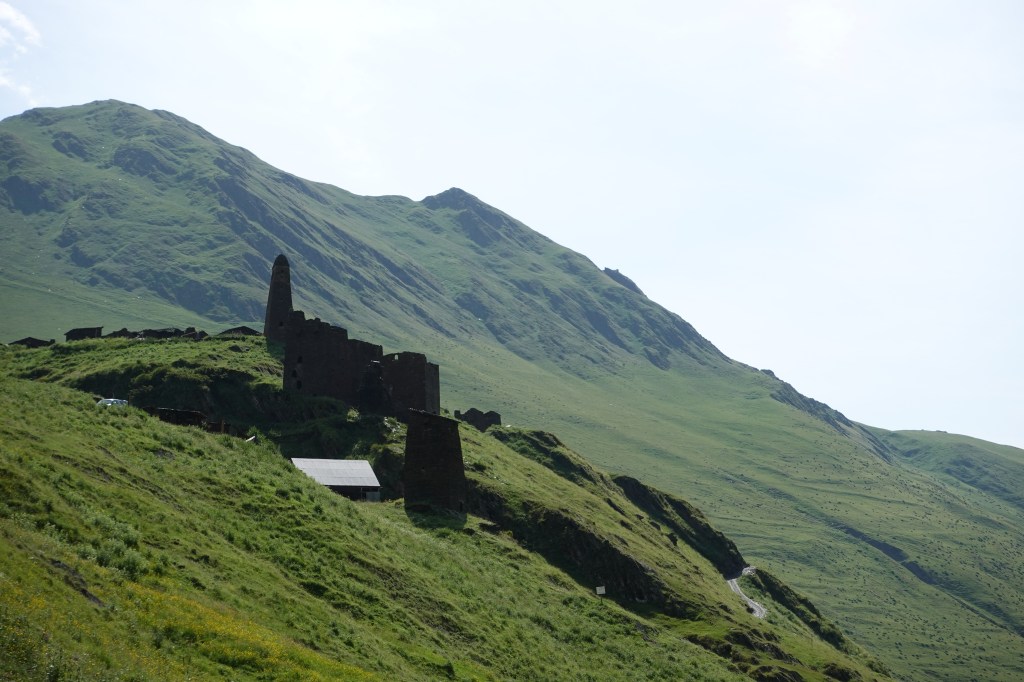
Parsma, where I spent my first night 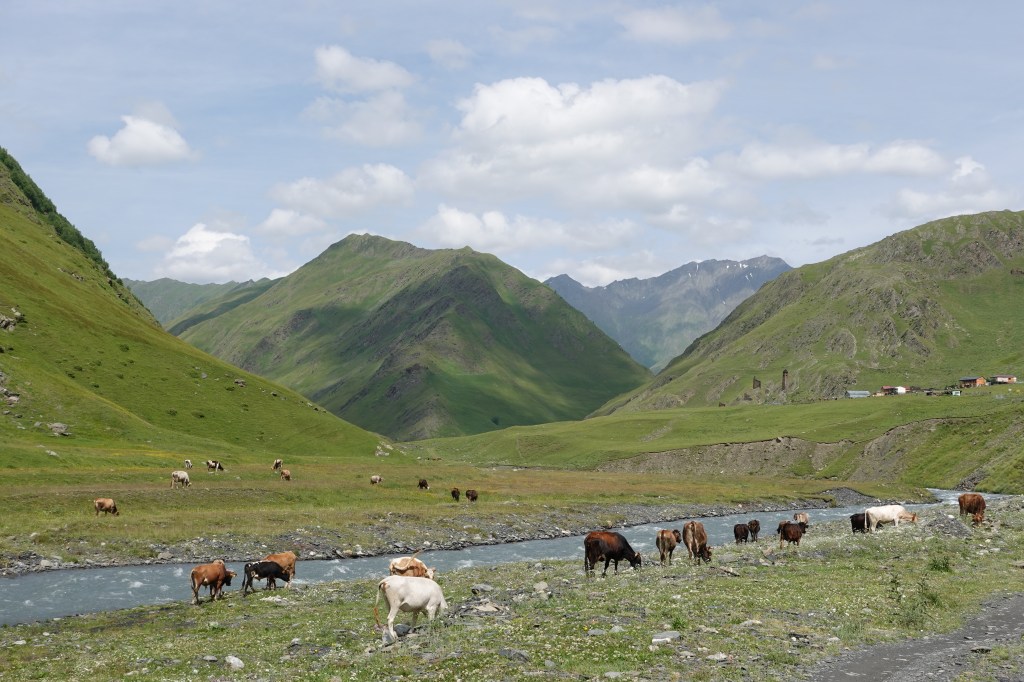
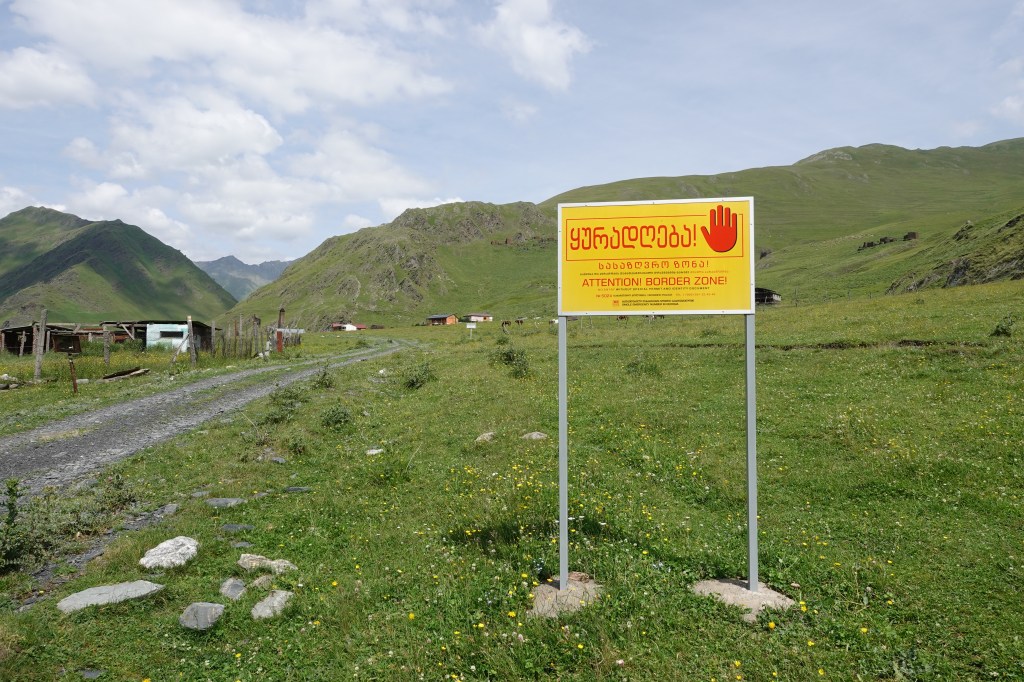
The path neared the Russian border here – and so a hiking permit had to be obtained 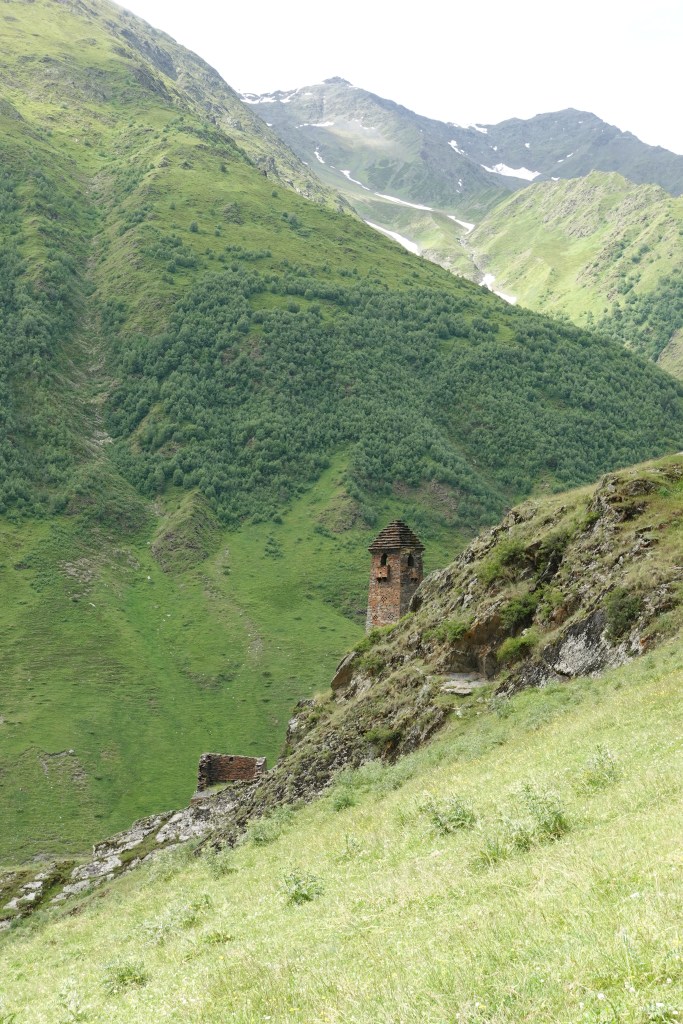
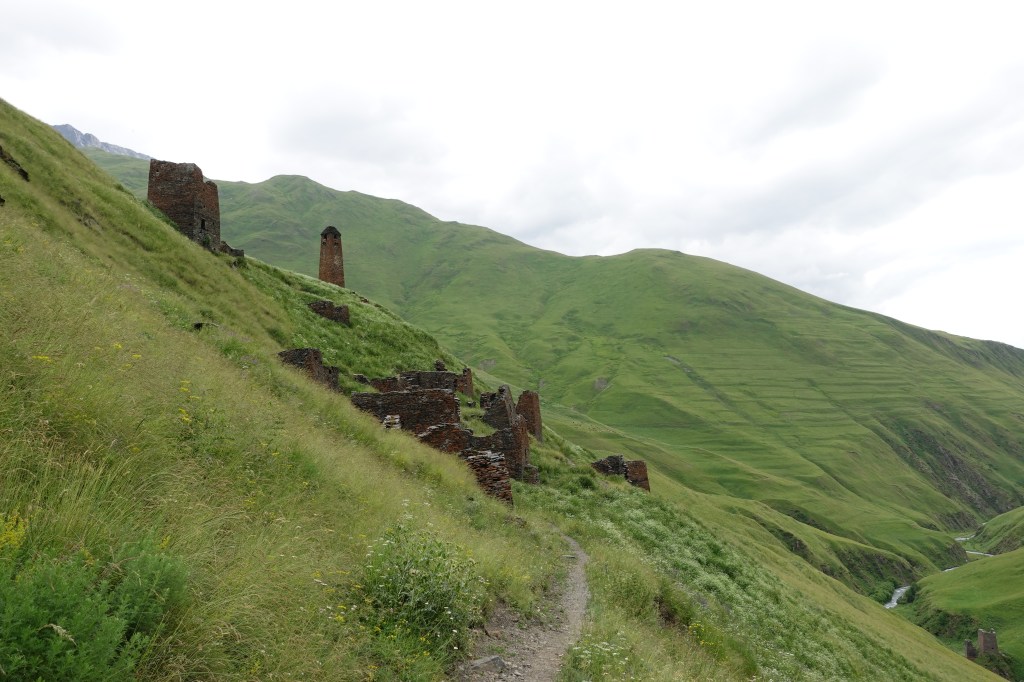
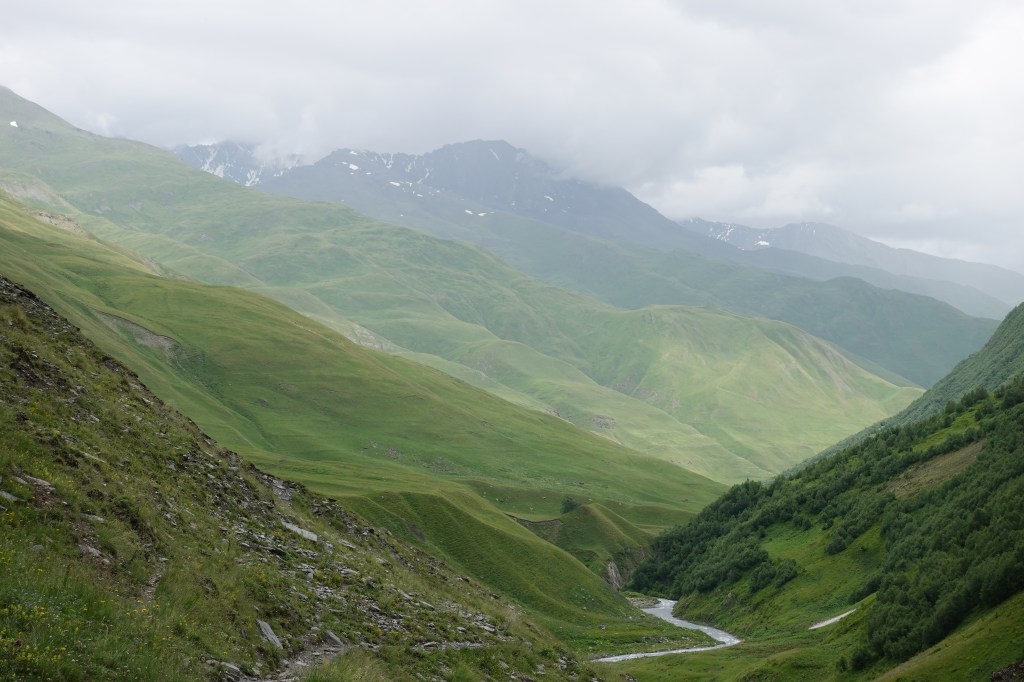
Getting wilder 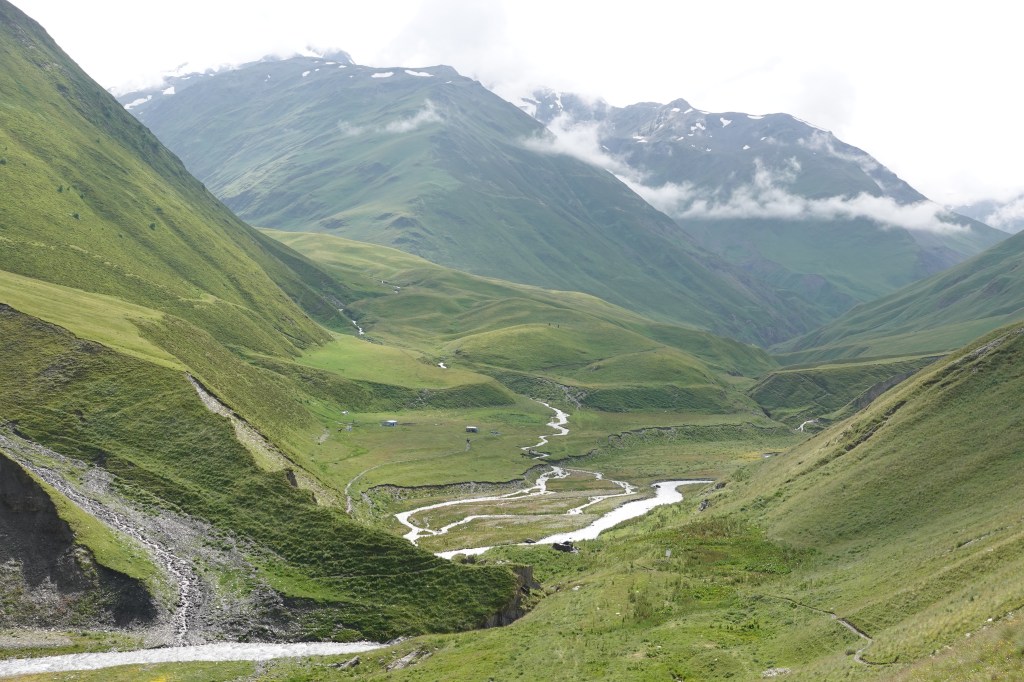
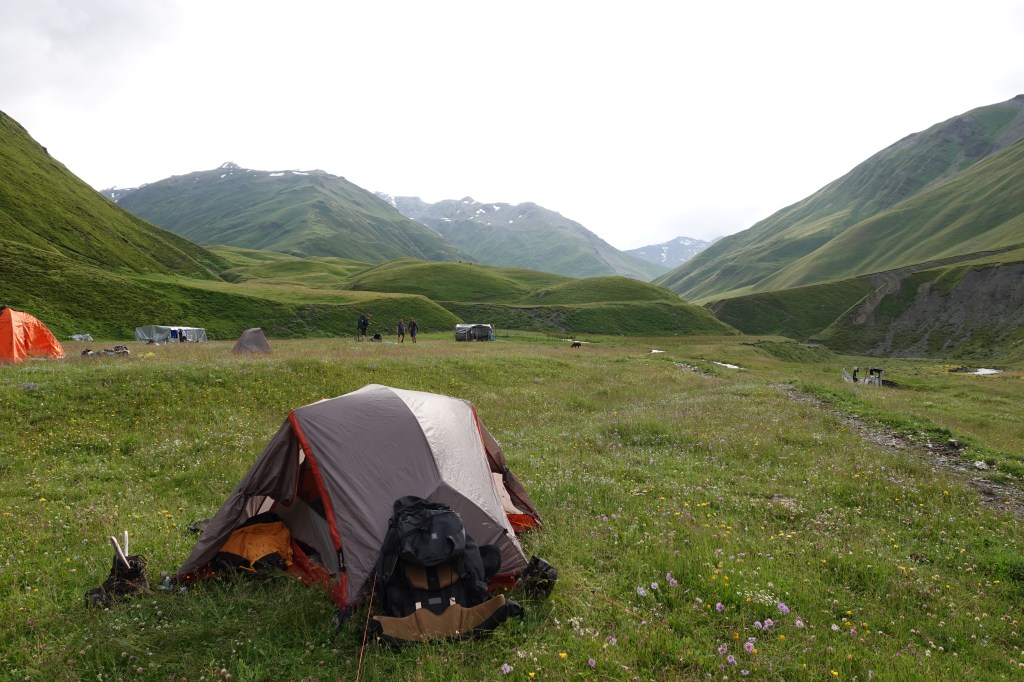
Camping spot for the second night 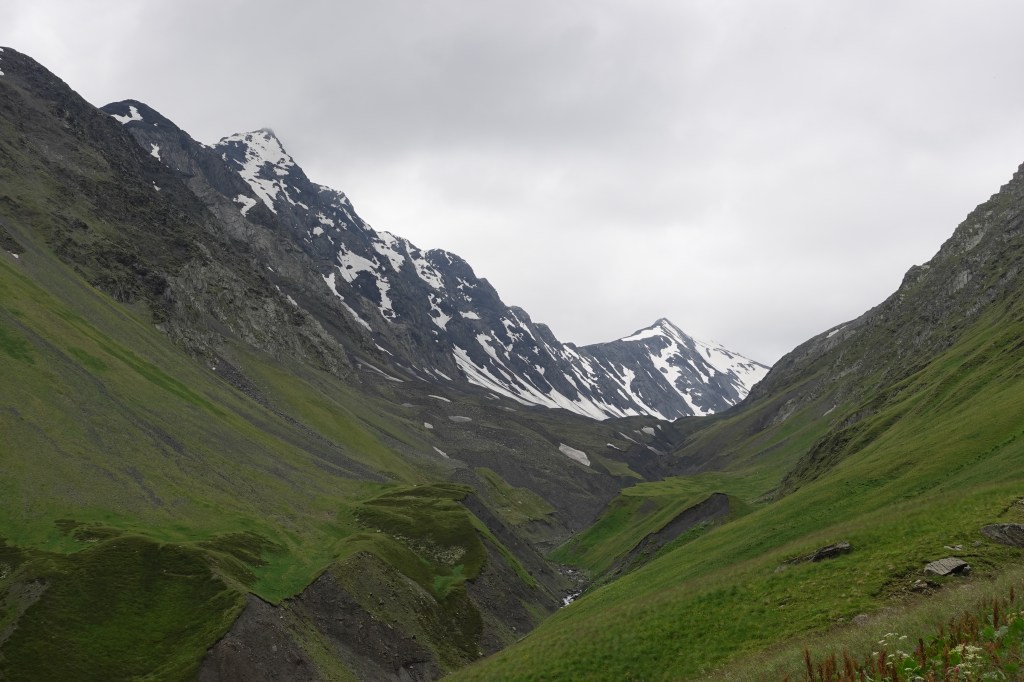
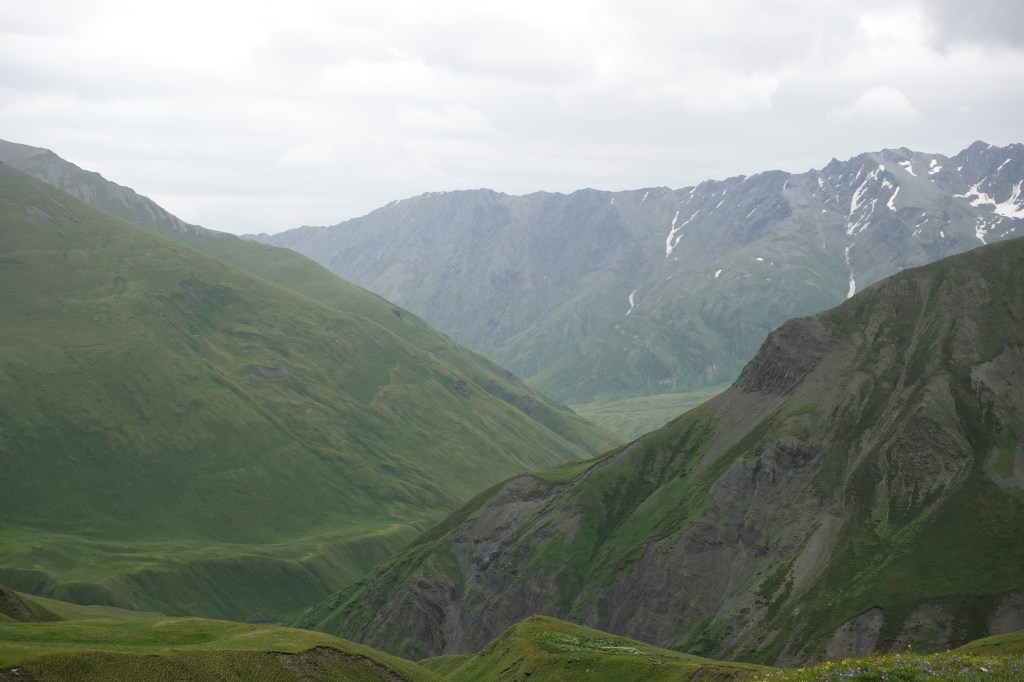

Looking back at the last views of Tusheti as I approached Atsunta Pass 
Nearly there! 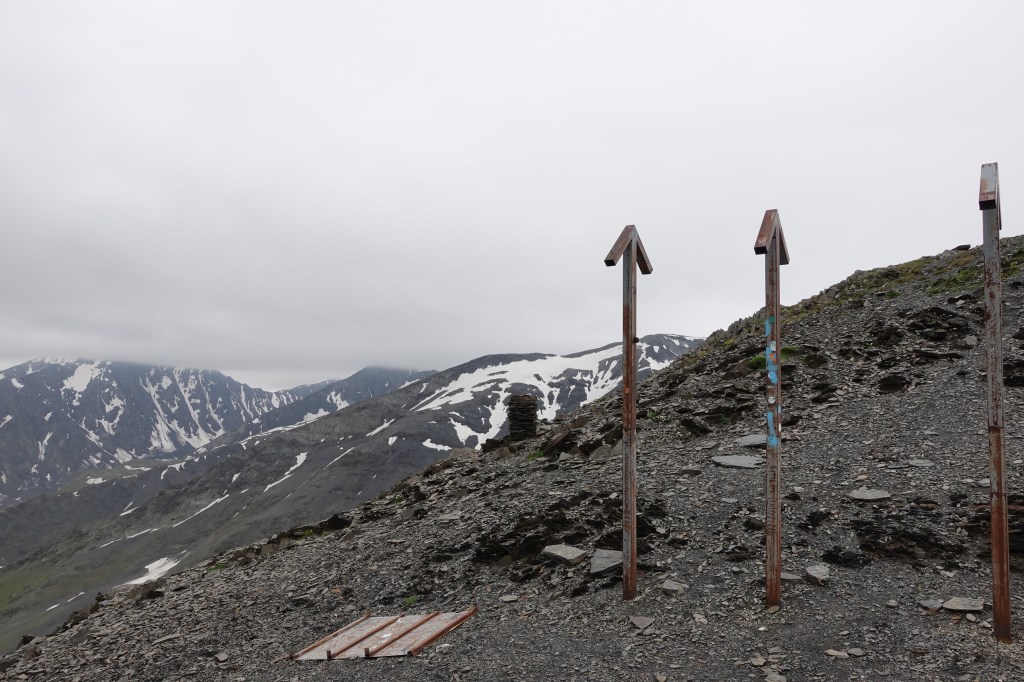
Atsunta pass (3400m) 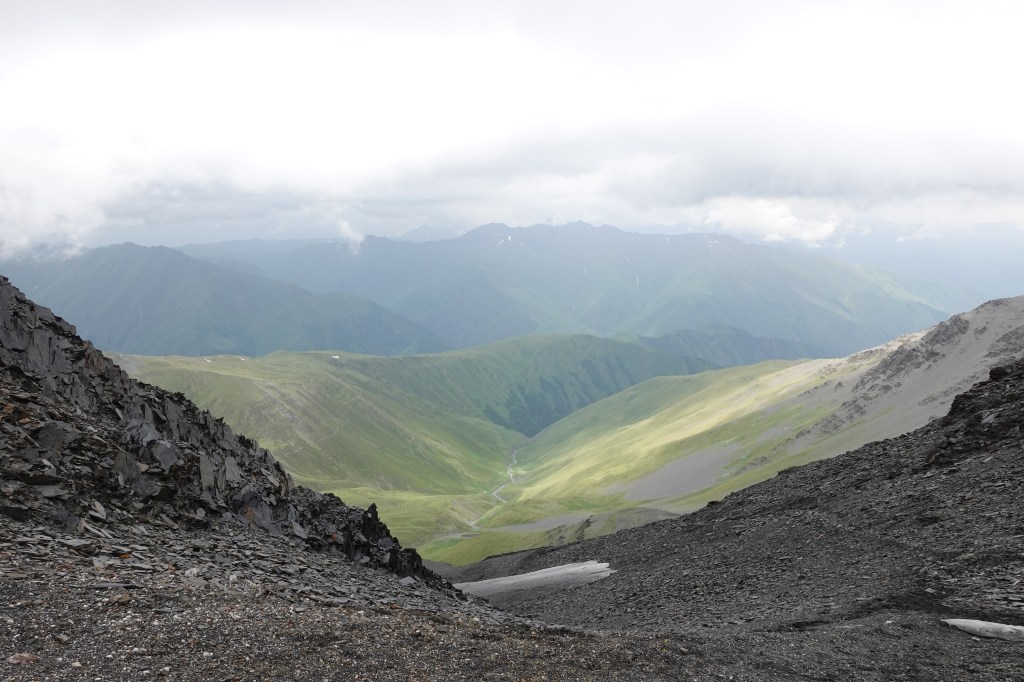
The first views of Khevshureti 
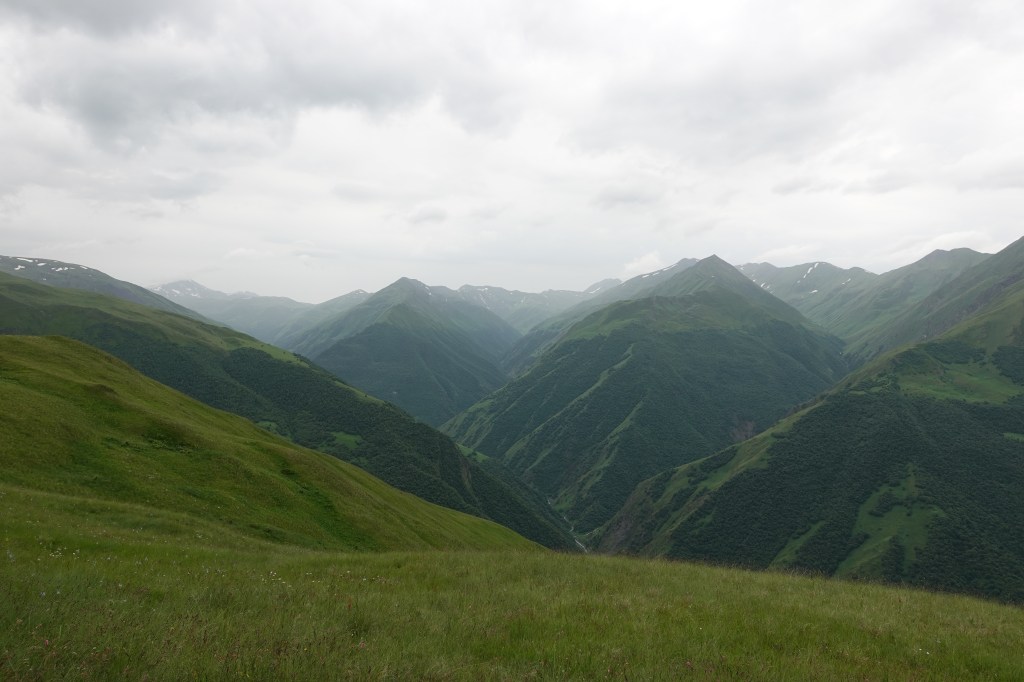
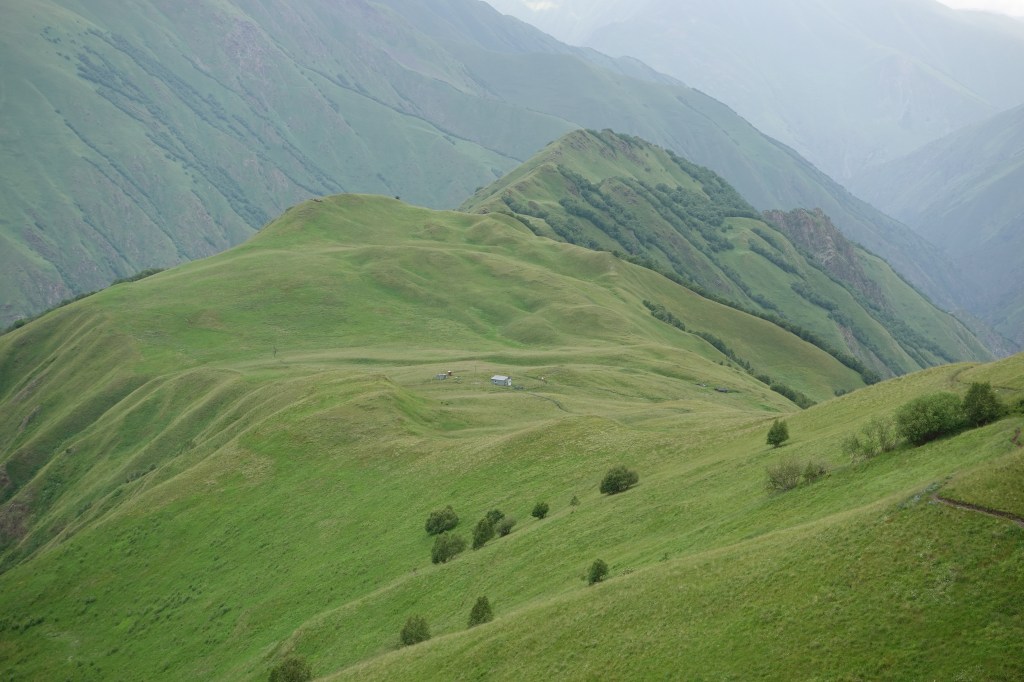
Border police hut visible on the ridge – there are officers stationed here all year round 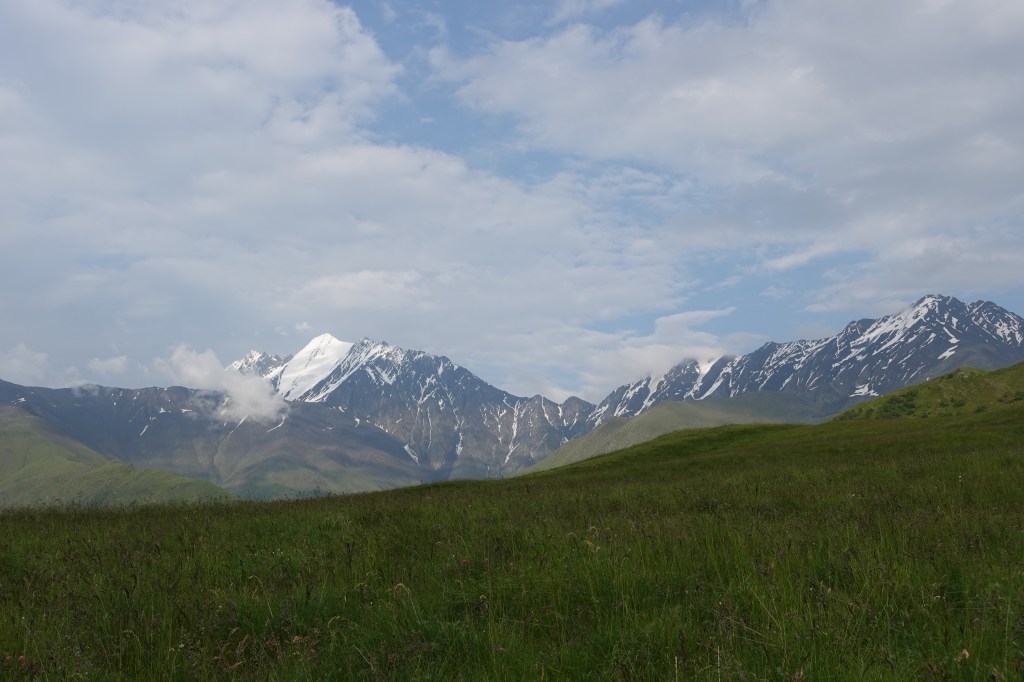
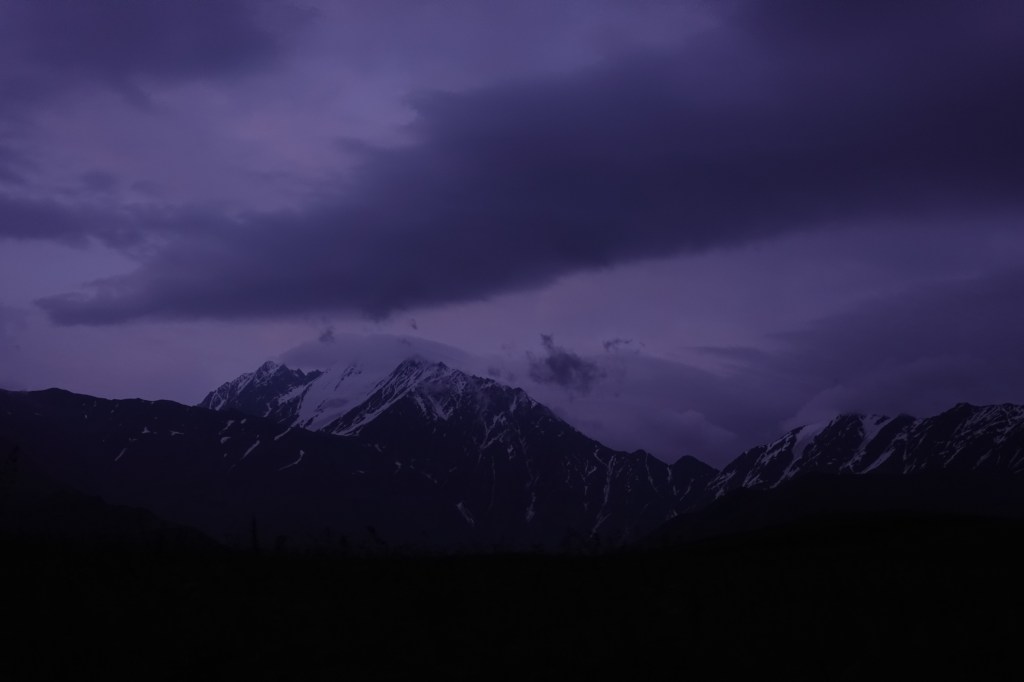
Views from my camping spot on the third night 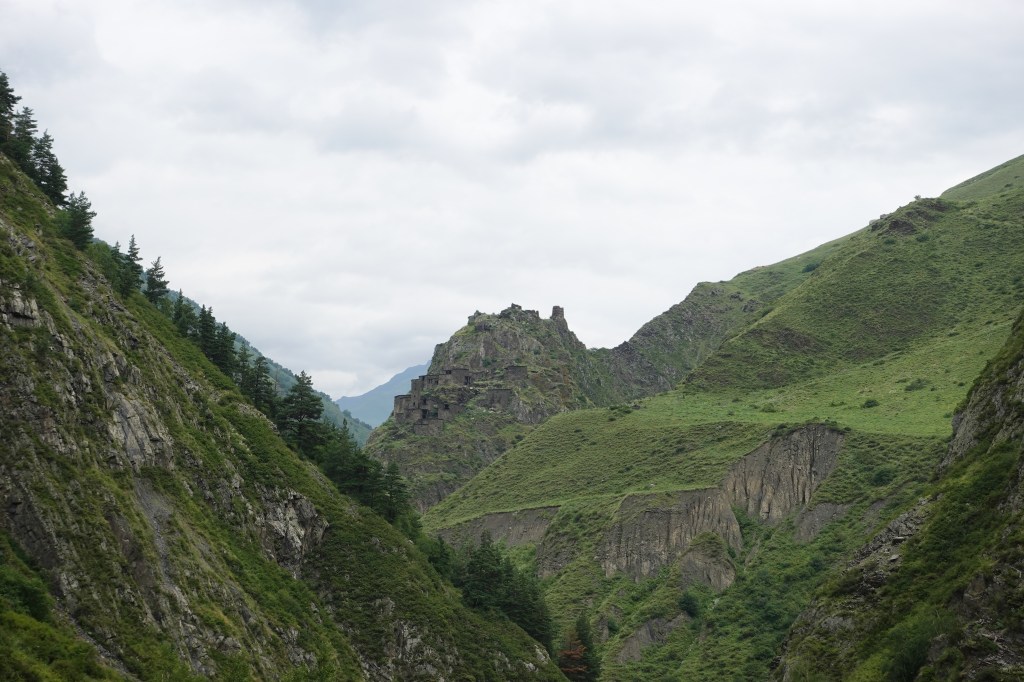
Mutso – a very strategic location for a village! 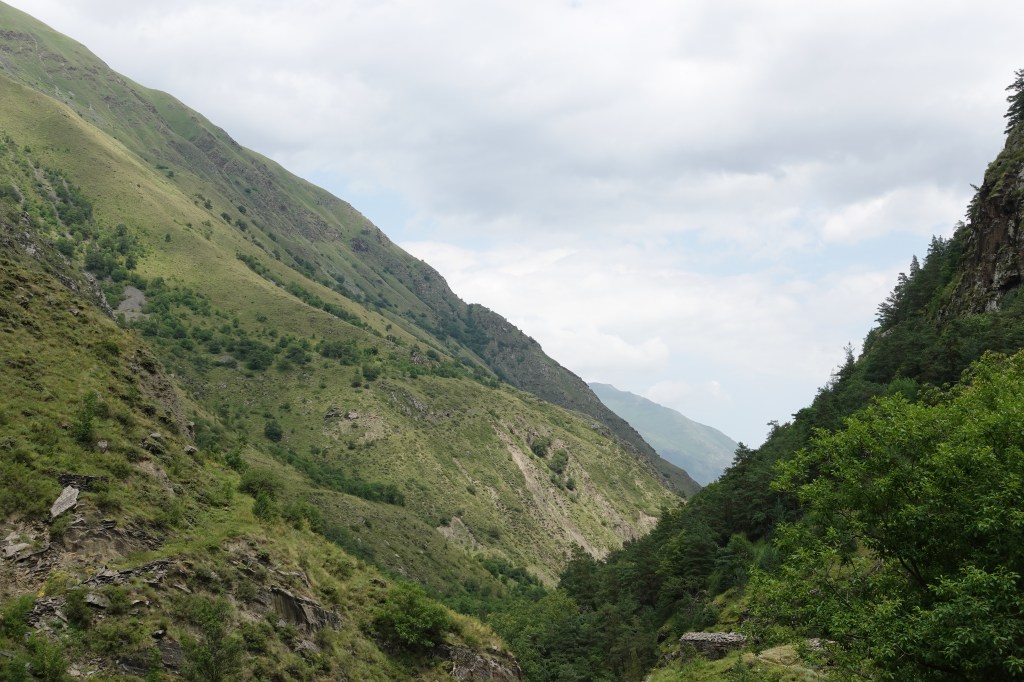
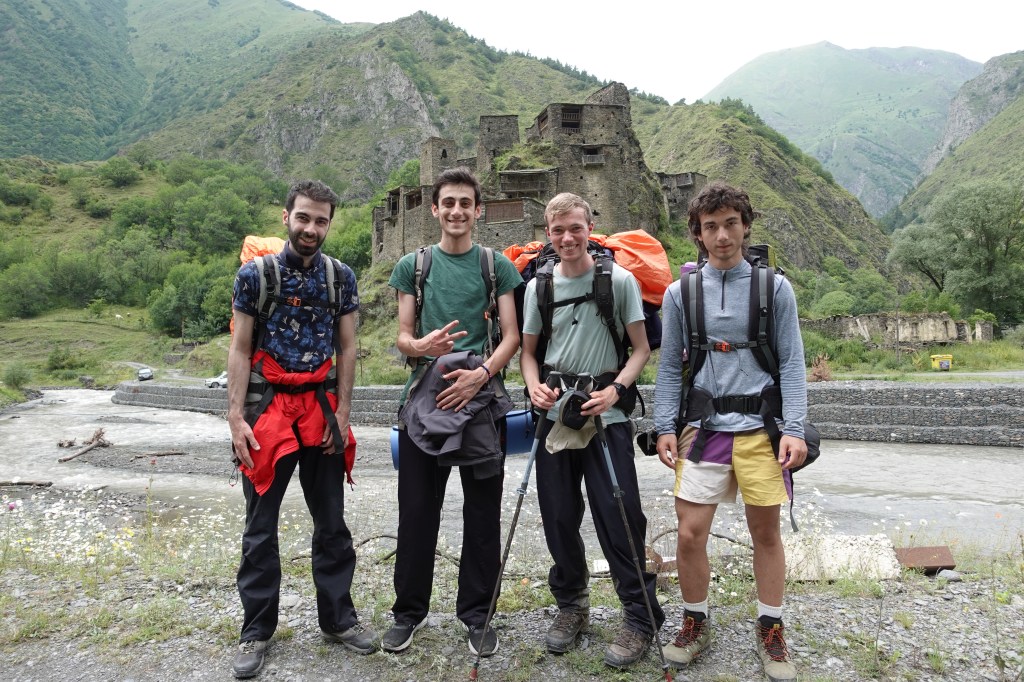
Back to civilisation – with the Georgian hiker friends I picked up on the last day 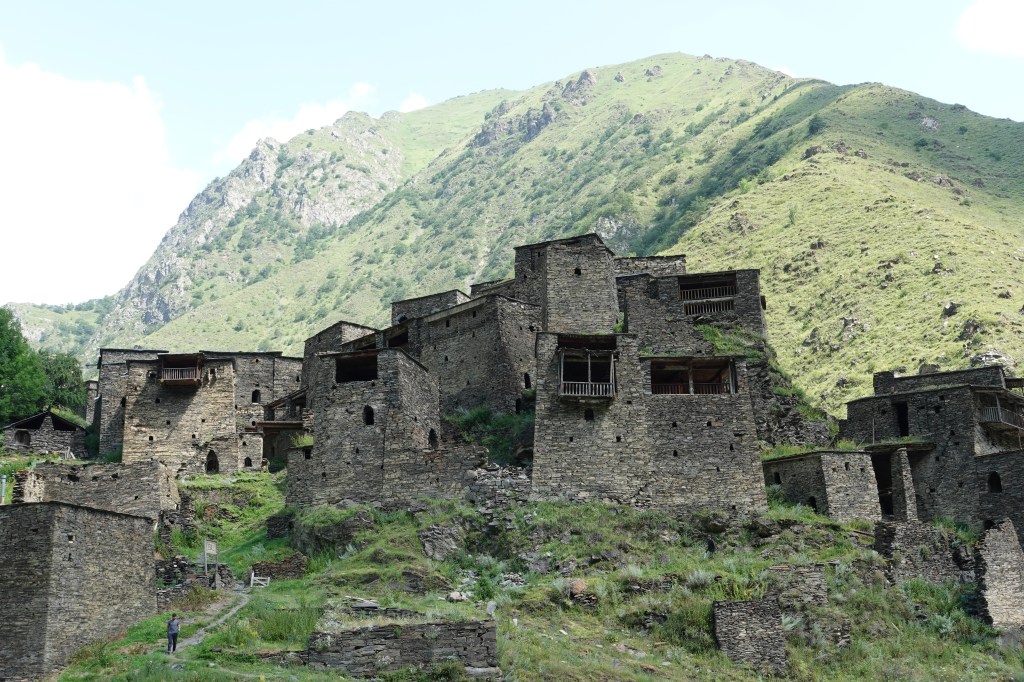
Shatili – my final destination 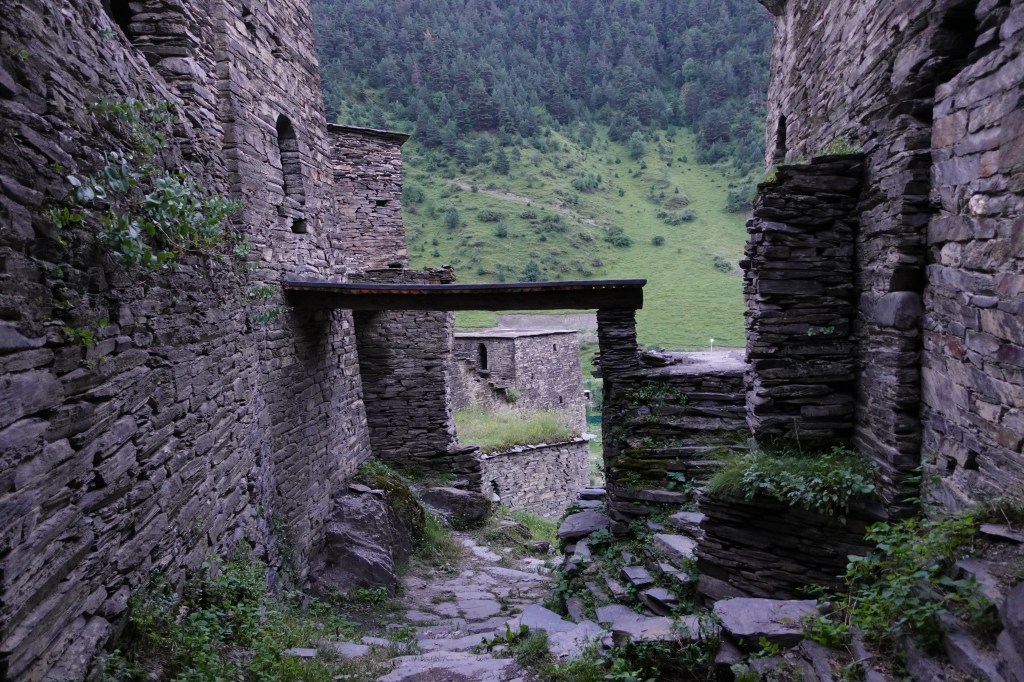
Up among the fortified towers 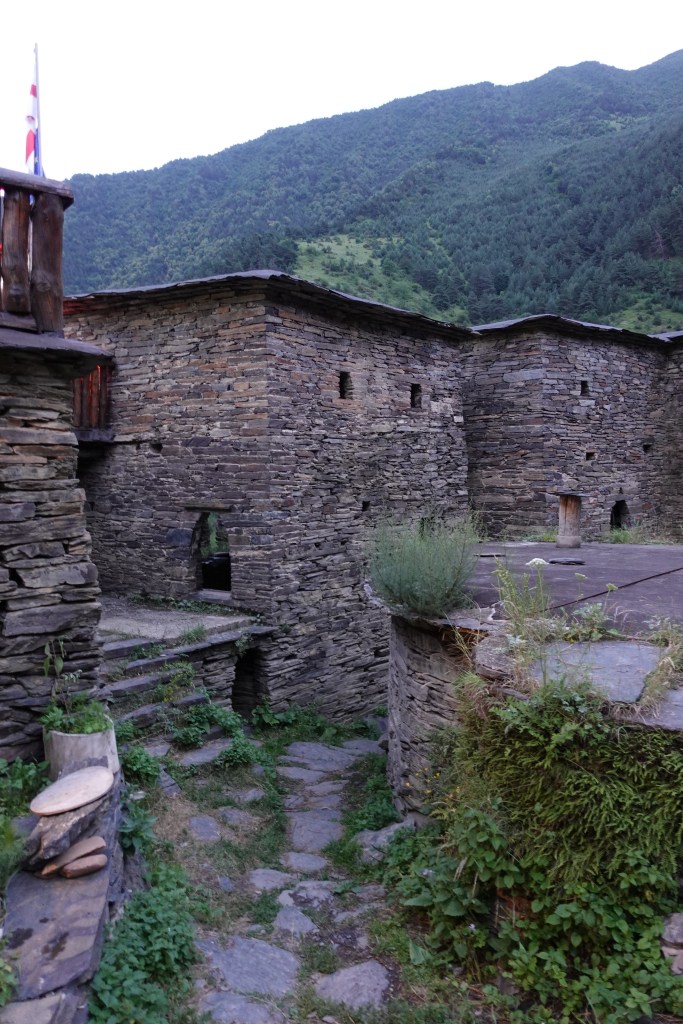
The landscapes of Tusheti and Khevshureti seemed wilder than those of Svaneti, but at the same time the peaks felt somehow less threatening. The people were certainly just as welcoming as the Svans: take the example of the man who drove me over the pass into Tusheti, who spontaneously invited me to his house for lunch before we set off, or the border police officer who, having had me fill in his forms, was very keen for me to meet his giant pet rabbit. On the last day, as I approached the fortified settlement of Shatili, I passed a group of young Georgian hikers who were brewing up beside the path, and they invited me to have some coffee with them (they offered me tea instead when I told them I was from England, of course…). We got talking and it turned out they were also going as far as Shatili that day, so we hiked the final 10km together. They were very keen I should learn some Georgian along with my Russian (I’m trying, I promise!), and it struck me how adamant they all were that they wanted to dedicate their careers post-graduation to the service of their own country, rather than looking for work abroad.
Georgia may be a small nation which has, throughout history, found itself surrounded by hostile neighbours (those defensive towers in the mountains weren’t built for nothing!), but it is also a nation which seems determined to prove itself on the world stage and to choose its own path. EU flags fly virtually everywhere in Georgia, despite them not (yet) being a member of the EU. Georgians clearly want membership though, and publishing that desire is important to them. It goes hand in hand with the ‘Fuck Russia’ graffiti to be found on every Tbilisi street corner.
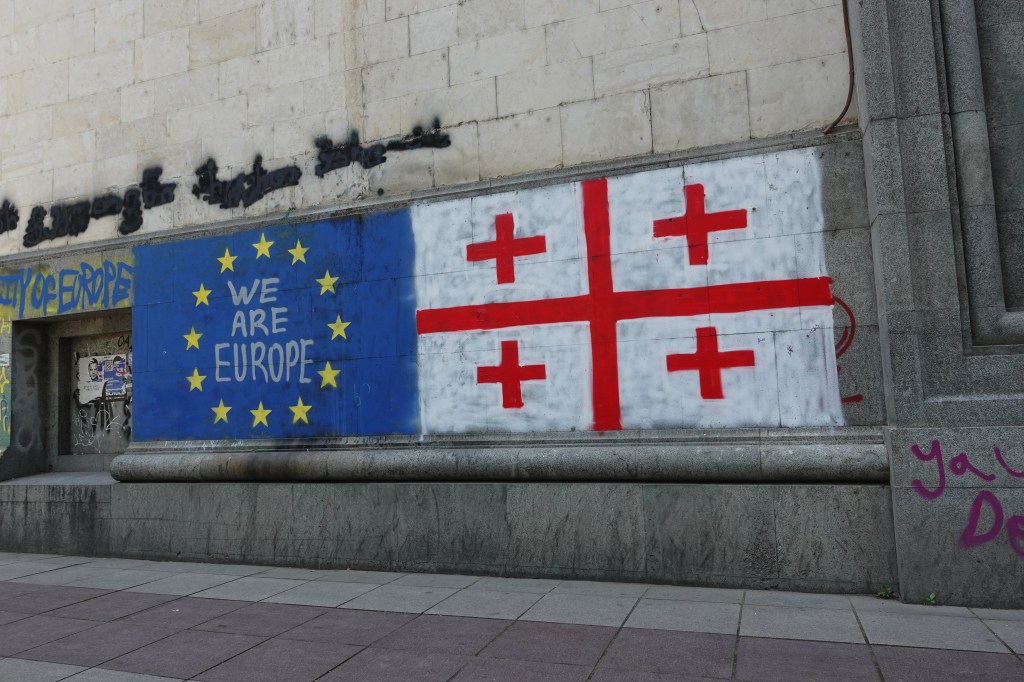
One of the Georgian boys with whom I hiked that final stretch shared his view on it all: “Georgians are hospitable people, we love all nations, everyone is welcome here. Apart from the Russians. We hate them.” Among the younger generation of Georgians, I had frequently seen an (entirely justified) condemnation of the actions of the Russian government expressed as an unwillingness to learn Russian and an outright refusal to communicate in Russian with Russian speakers. I was reminded of a conversation I had had with my landlady in Mestia, who had told me how much she wanted her children to learn Russian (simply for the sake of knowing another language), and yet had found them very unwilling. For much of the Georgian youth born since the end of the Soviet Union, it seems that learning Russian has lost its appeal, and that to speak Russian now is somehow to show one’s complicity with the enemy state. In this sense, they seem to be approaching the attitude I saw so frequently displayed by Estonians in Tallinn on my year abroad. Meanwhile, the majority of the older generation continue to speak Russian without any qualms, and indeed can often speak it far more fluently than English.
For better or for worse, Georgia will probably become – over time – a less and less useful destination for a student of Russian looking to get some practice in. But for the time being, I think it remains an excellent choice, and of course on top of the language practice, you have the privilege of witnessing what is no doubt a crucial stage in this country’s development, of seeing the natural beauty of the Caucasus, and of experiencing the warmth of Georgian hospitality. I’m sure I’ll be back before long, but for now it’s time to say nakhvamdis…and to get stuck into a Georgian language textbook!
 | ReplyForwardAdd reaction |
 Our man in...
Leave a comment